Hot Filling Machine with Conveyor and Tank Lift Technology
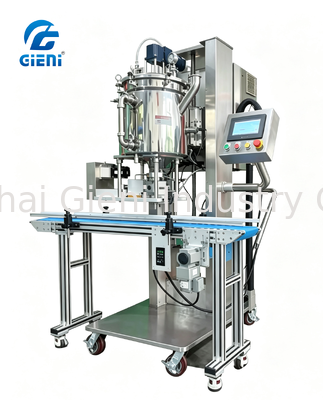
Efficiency in cosmetic manufacturing is rarely about a single machine. It is about how well equipment works together. A high precision filler that requires manual placement of every container will always be slower and more expensive to operate than a slightly simpler machine integrated into an inline conveyor system. The JSFL single nozzle hot filling machine with tank lift up down functionality was designed from the ground up for seamless integration with conveyors, creating a continuous, automated production flow.
Why Conveyors Transform Production
Manual filling processes rely on operators to load, position, and remove containers. This approach introduces fatigue, inconsistency, and labor bottlenecks. As order volumes grow, manual handling becomes unsustainable.
Adding a conveyor transforms the JSFL from a standalone filler into the heart of an automated line. Containers move smoothly from one station to the next. Operators focus on supervision rather than repetitive physical tasks. Output increases, labor costs decrease, and product quality becomes more consistent.
Integrated 1.5 Meter Adjustable Conveyor
The JSFL supports integration with a 1.5 meter adjustable speed conveyor. This length provides ample space for container staging, filling, and transition to downstream equipment. Conveyor speed is fully adjustable to match the filler’s cycle rate, ensuring synchronized operation without crowding or gaps.
The adjustable speed feature is critical because different products require different cycle times. A thick deodorant stick may fill more slowly than a thin lip balm. The conveyor adapts to these variations, maintaining optimal spacing and throughput.
Tank Lift Up Down for Conveyor Compatibility
The JSFL’s automatic tank lift system is perfectly suited for conveyor based operation. During filling, the heated tank lowers so the nozzle penetrates deep into the container. Product flows upward from the bottom, displacing air and ensuring complete fills.
Once filling completes, the tank retracts upward, preventing drips on the conveyor belt. This keeps the line clean, reduces cleaning frequency, and prevents sticky buildup that could interfere with container movement or damage the belt.
Downstream Integration Opportunities
A conveyor is rarely the end of the line. The JSFL is designed to work alongside capping machines, labeling systems, induction sealers, and cartoning equipment. As filled containers travel down the conveyor, they can be automatically capped, sealed, labeled, and packed into shipping cartons.
For contract manufacturers, this integration capability is invaluable. It allows a single line to handle multiple products and clients with minimal reconfiguration. For branded manufacturers, it supports consistent, high volume output with fewer operators.
Servo Driven Precision on the Move
Maintaining accuracy on a moving line is challenging. Variations in container spacing, belt speed, or vibration can affect fill weights. The JSFL overcomes these challenges with a Mitsubishi servo driven piston system. Servo motors deliver repeatable shot sizes within plus minus 0 point 1 gram at a five gram fill weight.
Because motion is electronically controlled, the filler can compensate for minor variations in container position. This ensures that every product receives the correct dose regardless of small timing differences on the conveyor.
Full Path Heating Supports Continuous Flow
Stopping and starting a hot filling machine can cause temperature fluctuations and wax solidification. Running on a conveyor promotes continuous operation, which stabilizes temperatures. The JSFL supports this with full path heating. The twenty liter dual layer tank, valve block, and nozzle are all temperature controlled.
Continuous flow reduces the risk of nozzle clogs, maintains consistent viscosity, and simplifies cleaning. It also improves energy efficiency by minimizing heating cycles and cooldown periods.
Vacuum Function Enhances Inline Quality
Air bubbles are a common defect in wax products. On a conveyor line, rejecting defective items can disrupt flow and reduce efficiency. The JSFL includes an integrated vacuum function that removes air from the tank before filling begins.
This proactive approach produces denser, bubble free products that rarely require rejection. The result is smoother operation, higher yields, and less waste.
Sanitary Design for Conveyor Lines
Conveyor systems must be kept clean to prevent contamination. The JSFL supports this with sanitary construction. All product contact surfaces are SUS316L stainless steel with mirror polished finishes. The open frame design provides easy access for wiping down the machine and surrounding area.
Because the tank lift system prevents drips, the conveyor belt stays cleaner for longer. This reduces cleaning frequency and minimizes production interruptions.
Safety Considerations
Moving conveyor lines introduce safety risks. The JSFL addresses these through thoughtful design. Emergency stop buttons are strategically placed along the machine and conveyor. Safety sensors can detect obstructions and halt operation instantly.
Operators receive training on safe interaction with moving lines, but the machine itself provides multiple layers of protection to prevent accidents.
Typical Production Performance
In integrated operation, the JSFL achieves twenty to thirty pieces per minute at a five gram fill weight. Accuracy remains within plus minus 0 point 1 gram throughout extended runs. When paired with downstream equipment, a single line can produce thousands of finished units per shift with minimal manual intervention.
Why Conveyor Integration Defines Scalability
Business growth rarely happens in isolation. As demand increases, manufacturers must scale production without proportionally increasing labor. Conveyor integration makes this possible.
The JSFL single nozzle hot filling machine with tank lift up down functionality provides the precision, cleanliness, and compatibility required to serve as the anchor of an inline system. For manufacturers planning for the future, investing in conveyor ready equipment is not optional. It is the logical next step toward sustainable growth.




 English