

|
Product Details:
|
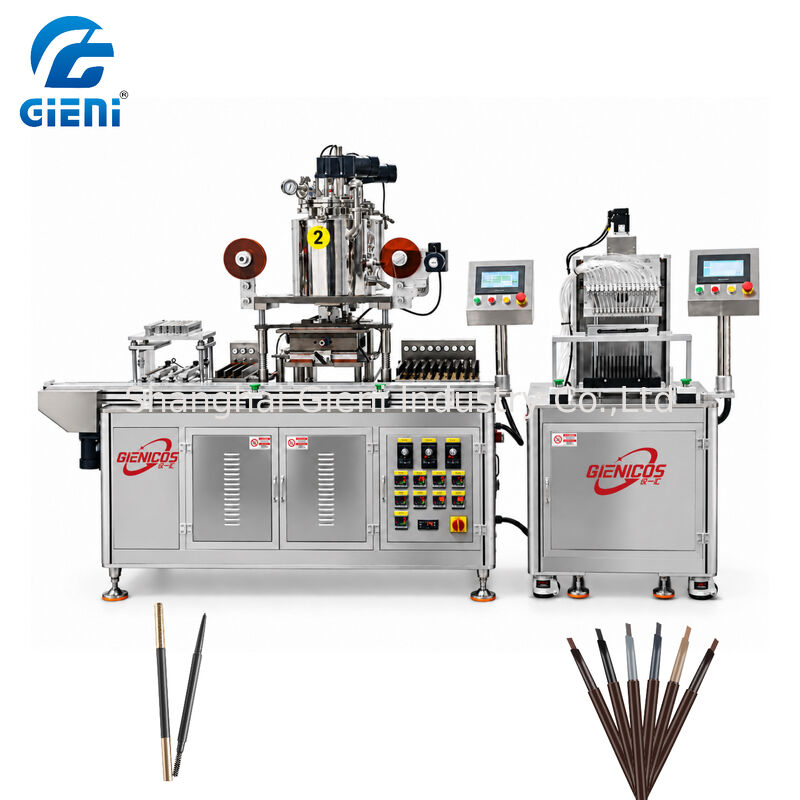
| Product Name: | Twin 5L Tank Hot Melt Cosmetic Pencil Filling Machine | Application: | Eyeliner Pencil, Eyebrow Pencil, Lip Liner, Under-Eye Highlight Pencil |
|---|---|---|---|
| Material Tank: | 5L × 2, Three-layer Oil Heated, SS316L Contact Parts | Temperature Control: | Dual Loop Omron Controllers, Separate Material And Oil Set Points |
| Stirring System: | JSCC Stirring Motors For Pigment Suspension | Filling Method: | Servo Driven Hot Melt Filling With Bottom-up Nozzle |
| Filling Volume: | 2-10 Ml | Filling Speed: | 45-50 Pcs/min (formula And Operator Dependent) |
| Cooling Temperature: | -2°C To -1°C | Mould Temperature Indication: | Temperature Labels On Pencil Moulds |
| Voltage: | Filling Part 3P/380V, Demolding Part 1P/220V | Total Power: | 12.5 KW |
| Highlight: | Hot Melt Cosmetic Pencil Filling Machine,Eyeliner Cosmetic Pencil Filling Machine,5L Tank Cosmetic Pencil Filling Machine |
||
This hot melt cosmetic pencil filling machine is built around the temperature-sensitive nature of wax-based pencil bulk. Two 5L tanks sit in a three-layer structure with oil heating, and the material temperature and the heating oil temperature are regulated by two independent Omron control loops. That separation lets a producer keep the bulk at a narrow working window while the jacket runs slightly higher for heat transfer, which is what pigment-heavy eyebrow pencil and eyeliner formulas need to avoid local scorching and shade drift between batches.
The machine fills round and triangular cosmetic pencils in the 2-10 ml range at a stated 45-50 pcs/min, and the servo filling head follows a bottom-up curve so the cavity fills from the base. A hot melt cosmetic pencil filling machine lives or dies on two numbers: temperature stability and shot repeatability. The first is handled by the dual-loop oil heating design and the stirring motor that keeps pigment in suspension, the second by the servo drive and PLC recipe storage. Both are visible to the operator on the touch screen, so an out-of-window alarm is caught before a tray is wasted. Moulds carry temperature-indicating labels, which means the preheating table can be verified against the real mould surface instead of an assumed air temperature.
| Item | Specification |
|---|---|
| Model | JPF-16 |
| Application | Eyeliner pencil, eyebrow pencil, lip liner pencil, under-eye highlight pencil |
| Filling Volume | 2-10 ml |
| Filling Method | Servo driven hot melt filling, bottom-up nozzle |
| Filling Speed | 45-50 pcs/min (formula and operator dependent) |
| Material Tank | 5L × 2, three-layer oil heated, SS316L contact parts |
| Temperature Control | Dual loop, Omron controllers, separate material and oil set points |
| Stirring | JSCC stirring motors with continuous pigment suspension |
| Cooling Temperature | -2°C to -1°C |
| Voltage | Filling part 3P/380V; demolding part 1P/220V |
| Total Power | 12.5 kW |
| Air Consumption | 0.4 m³/min |
| PLC and Servo | Mitsubishi |
| Pneumatics | Airtac |
| Electrical Components | Schneider |
When a buyer evaluates a hot melt cosmetic pencil filling machine, the supplier is usually asked to run the buyer’s own bulk. That trial matters because two formulas with the same melting point can behave differently: one may need a longer cooling dwell, another may need a higher jacket temperature to stay flowable through a small nozzle. The dual-loop arrangement on this line allows those adjustments without mechanical changes, and the timing of the preheating and cooling tables can be re-entered in minutes. For factories moving from manual pouring to an automatic cosmetic pencil filling machine, the acceptance criteria are normally set on three points: weight spread across a tray, absence of air holes at the tip and release quality after cooling.
The line is assembled in a workshop that also builds filling, capping and labeling equipment, so the same engineering team that quotes the machine stays involved during commissioning. Documents shared with buyers include the electrical diagram, pneumatic layout, spare part list, operation manual and a video of the factory acceptance run on the buyer’s own bulk samples. That documentation package is what quality managers usually ask for before they approve a new supplier, and it is prepared before shipment rather than after arrival.
Q: Why are there two 5L tanks instead of one larger tank?
A: Two tanks let a producer keep a second shade or a second formula heated and ready, which shortens changeover on a hot melt cosmetic pencil filling machine. Each tank has its own oil-heated jacket and stirring motor, so neither has to be drained and reheated while the line waits.
Q: How does the machine prevent the bulk from overheating?
A: Material temperature and heating oil temperature are controlled by separate Omron loops, and heat is transferred through the tank wall rather than a local heater. The operator sets both values for the formula and monitors them on the touch screen, with the mould temperature labels giving a second reference point after preheating.
Q: Which pencil shapes can be filled on this line?
A: Round and triangular pencil bodies are both supported. Round pencils are demolded with the needle push method and triangular pencils with the air blow method, and the matching mould set is supplied for the ordered shape.
Q: What electrical supply does it need?
A: The filling section requires three-phase 380V and the demolding section single-phase 220V, with a total installed power of 12.5 kW and an air consumption of 0.4 m³/min.
A trial run is the only reliable way to judge a hot melt cosmetic pencil filling machine. Send the actual bulk and the actual pencil bodies, and ask for three things: weight spread across a full tray, a cross-section of the cooled stick and a release check after 24 hours. The twin tank hot melt cosmetic pencil filling machine described here allows the trial to be run twice in one day, once per tank, so two shades can be compared side by side. Buyers often use this hot melt cosmetic pencil filling machine for a 500 piece pilot before committing to a full order, and the recipe saved during the pilot is the one used for mass production.
Utility planning matters too. The hot melt cosmetic pencil filling machine needs three-phase 380V for filling, single-phase 220V for demolding and 0.4 m³/min of air. Factories that already run a hot melt cosmetic pencil filling machine on the same floor usually share the compressor, but the 12.5 kW load should be added to the panel schedule in advance.
Contact Person: Joan.WU
Tel: 8613482060127


 English