

|
Product Details:
|
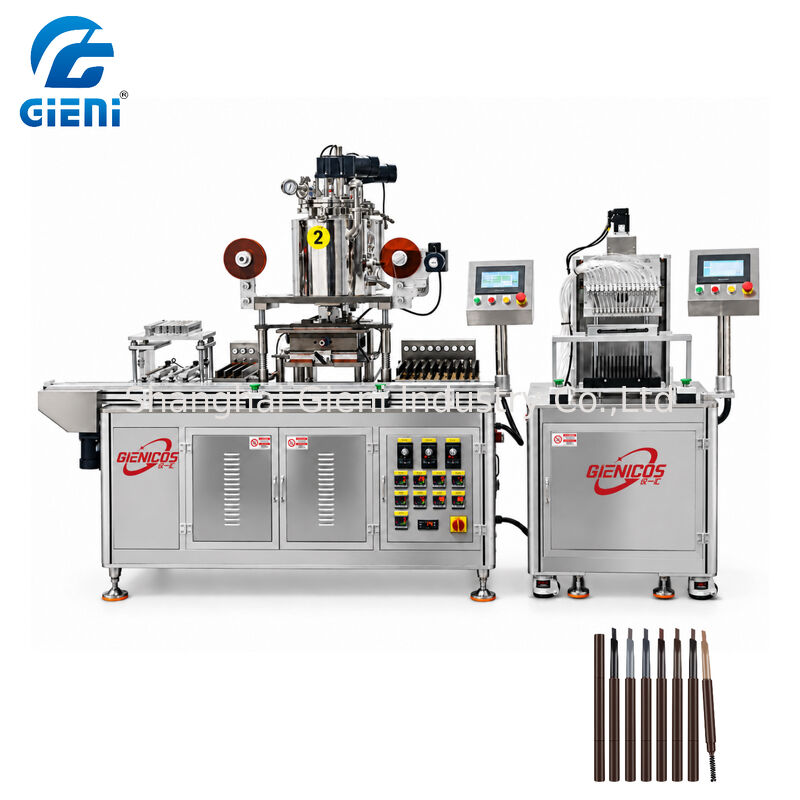
| Product Name: | Air Blow Demolding Triangular Eyeliner Pencil Filling Machine | Application: | Triangular Eyeliner Pencil, Round Eyebrow Pencil, Lip Liner Pencil |
|---|---|---|---|
| Pencil Shapes: | Round And Triangular Cross-section | Demolding Method: | Air Blow For Triangular Pencils, Needle Push For Round Pencils |
| Product Contact Material: | SS316L Wetted Parts Inside SUS304 Tank Shell | Filling Method: | Servo Driven Bottom-up Filling |
| Filling Volume: | 2-10 Ml | Filling Speed: | 45-50 Pcs/min (formula And Operator Dependent) |
| Cooling Temperature: | -2°C To -1°C | Control System: | Mitsubishi PLC With Mitsubishi Servo Motor |
| Voltage: | Filling Part 3P/380V, Demolding Part 1P/220V | Air Consumption: | 0.4 M³/min |
| Highlight: | Triangular Eyeliner Pencil Filling Machine,Air Blow Demolding Pencil Filling Machine,PLC Triangular Eyeliner Pencil Filling Machine |
||
Triangular cosmetic pencils are the format most likely to be damaged during release, because the three flat faces grip the mould and a needle push can mark an edge. This triangular eyeliner pencil filling machine therefore relies on the air blow demolding method: after timed cooling, a controlled air pulse releases the pencil from the cavity without contacting the product surface. The same platform fills round pencils with the needle push method, so a producer running both shapes does not need two lines.
The filling head is servo driven and travels bottom-up, so cavities fill from the base and trapped air escapes ahead of the bulk. Two 5L tanks with three-layer oil heating feed the head, and the internally wetted parts are SS316L. On a triangular eyeliner pencil filling machine the nozzle position relative to the three faces matters as much as the shot size, which is why the mould locating system is designed around the pencil geometry rather than a generic round cavity. Preheating, filling, cooling and demolding run on timers under a Mitsubishi PLC, and mould temperature labels let the operator confirm the preheat actually reached the surface.
| Item | Specification |
|---|---|
| Model | JPF-16A |
| Application | Triangular eyeliner pencil, round eyebrow pencil, lip liner pencil |
| Pencil Shapes | Round and triangular cross-section |
| Filling Volume | 2-10 ml |
| Filling Method | Servo driven bottom-up filling |
| Demolding Method | Air blow for triangular pencils, needle push for round pencils |
| Filling Speed | 45-50 pcs/min (formula and operator dependent) |
| Cooling Temperature | -2°C to -1°C |
| Material Tank | 5L × 2, SUS304 shell with SS316L contact parts |
| Voltage | Filling part 3P/380V; demolding part 1P/220V |
| Total Power | 12.5 kW |
| Air Consumption | 0.4 m³/min |
| PLC and Servo | Mitsubishi |
| Pneumatics | Airtac |
Buyers usually ask whether air blow demolding can replace needle push entirely. In practice triangular pencils benefit most, because the air pulse avoids edge contact and reduces the risk of surface marking on a sharp corner. A triangular eyeliner pencil filling machine set up this way also shortens the release step, since there is no pin travel to sequence. For rounds, needle push remains the faster and more direct method, so the recommended configuration is a line that supports both modes and lets the operator pick per product, with the choice stored alongside the fill recipe.
The line is assembled in a workshop that also builds filling, capping and labeling equipment, so the same engineering team that quotes the machine stays involved during commissioning. Documents shared with buyers include the electrical diagram, pneumatic layout, spare part list, operation manual and a video of the factory acceptance run on the buyer’s own bulk samples. That documentation package is what quality managers usually ask for before they approve a new supplier, and it is prepared before shipment rather than after arrival.
Q: Why use air blow demolding for triangular pencils?
A: A triangular cavity grips the product on three faces, so a mechanical ejector can mark an edge. The air blow method releases the pencil with a controlled pulse and no contact, which keeps the finished surface intact.
Q: Can the same machine fill round eyebrow pencils?
A: Yes. Round pencils run with the needle push demolding mode on the same base machine, using the matching mould set and recipe.
Q: What nozzle and filling control does the machine use?
A: A Mitsubishi servo drive moves the filling head along a bottom-up curve while the PLC controls volume and flow. Shot size is entered in millilitres on the touch screen and stored per product.
Q: What are the utility requirements?
A: Three-phase 380V for the filling section, single-phase 220V for the demolding section, 12.5 kW total installed power and 0.4 m³/min air consumption, with Airtac pneumatic components throughout.
Release quality on a triangular eyeliner pencil filling machine is decided long before the air pulse fires. The cavity surface finish, the draft on each of the three faces and the mould temperature at the moment of filling all influence how cleanly the pencil leaves the cavity. The triangular eyeliner pencil filling machine is supplied with moulds built for the ordered profile, and the temperature labels on the moulds let the operator confirm that preheat reached the intended surface value rather than an air reading.
Producers who run both triangular and round pencils should order the triangular eyeliner pencil filling machine with both demolding modes enabled. The triangular eyeliner pencil filling machine then covers a full eye makeup range, and the recipe list keeps each product separate, so switching shape does not require re-qualifying the whole cycle.
Contact Person: Joan.WU
Tel: 8613482060127


 English